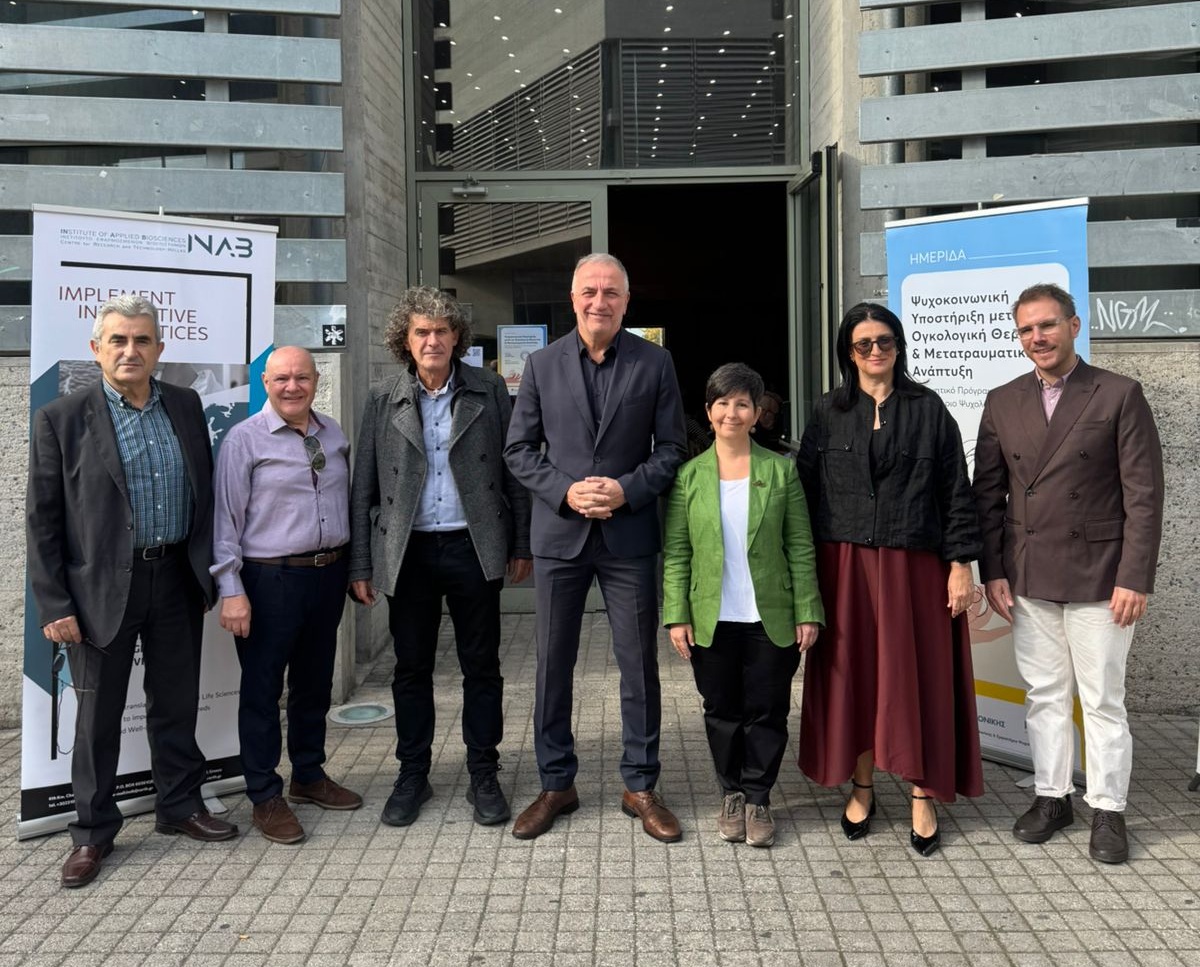
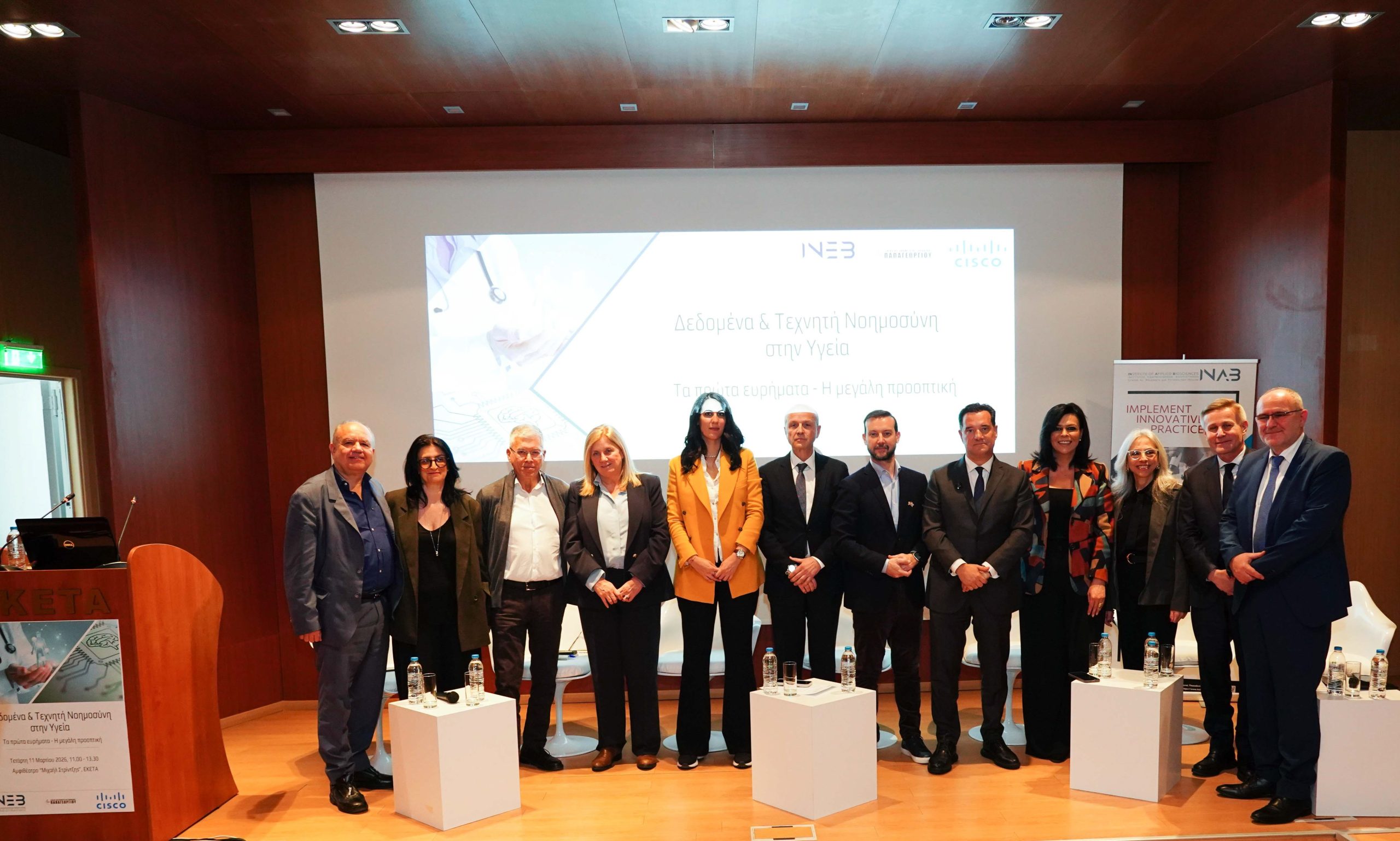
The event organized by the Institute of Applied Biosciences of the Centre for Research and Technology Hellas (INAB/CERTH) in collaboration with Cisco and with the support of the General Hospital of Thessaloniki “Papageorgiou”, on Wednesday, March 11, 2026, at the “GERASIMOS STRINTZIS” Amphitheatre of CERTH in Thermi, Thessaloniki, was a great success.
The purpose of the event, “Data & Artificial Intelligence in Health: The First Findings – The Big Perspective”, was to present the first results of the partnership for the utilization of Artificial Intelligence and health data, with the aim of improving healthcare and strengthening clinical studies in Greece.
In the context of the event, the Minister of Health, Adonis Georgiadis, presented the government’s strategic plan for the emergence of Greece as an international hub for clinical research, while in a recorded message, the Deputy Minister of Digital Governance, Mr. Christos Dermentzopoulos, confirmed the government’s active support for actions that enhance innovation.
Thessaloniki is the protagonist
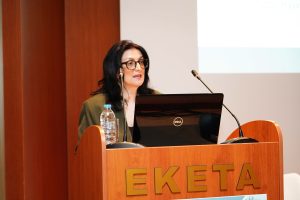
In her opening remarks, the Director of INAB/CERTH, Anastasia Chatzidimitriou, emphasized that INAB/CERTH is the only institute of applied biosciences in Greece. She highlighted the Institute’s central role in international initiatives, such as the management of large European databases for hematological diseases in collaboration with the European Society of Hematology, its participation in the European Commission’s “Understanding Cancer” initiative, and its role as a national hub in the European Clinical Research Infrastructure Network (ECRIN).
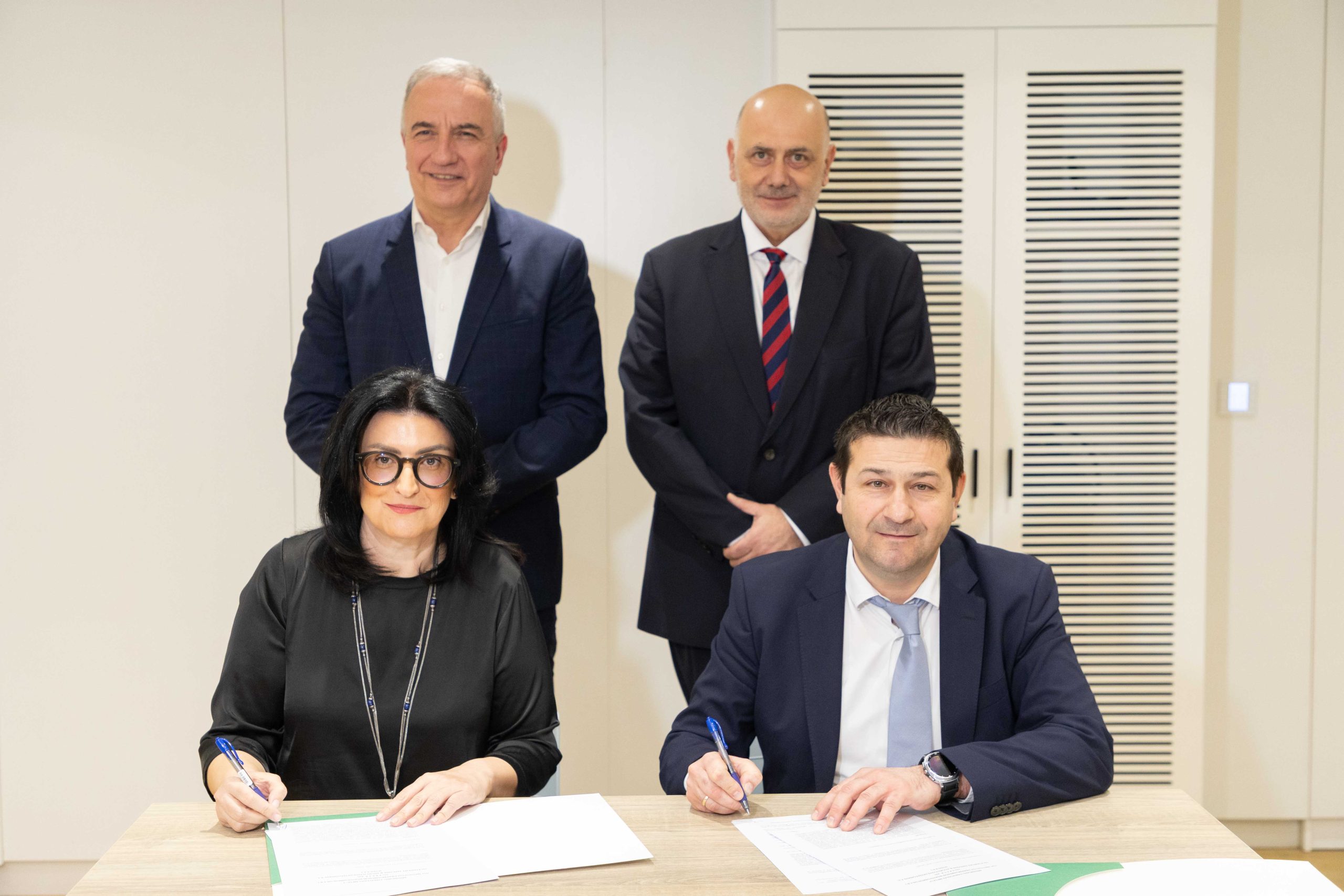
Ms. Chatzidimitriou noted that the collaboration with Cisco and the “Papageorgiou” Hospital is a model for how innovation should proceed, expressing the hope that, with the support of the State, other large hospitals will soon follow. “Clinical research is a duty to society,” she stressed, adding that a safe and reliable technological and scientific framework has already been created for the utilization of health data and the design of clinical studies using artificial intelligence in accordance with international standards.
For his part, the Director of Central Administration and Chairman of the Board of Directors of CERTH, Evangelos Bekiaris, stated that he is proud of the applied research that produces measurable results for man. He noted that the goal of this partnership is “to use the millions of data of our fellow citizens and to be able to achieve a personalized and much more effective level of medical services”, aiming for a new level of care based on domestic technology.
The Deputy Minister of Development, responsible for Research and Innovation, Stavros Kalafatis, spoke of a pioneering partnership that leads to the convergence of life sciences with digital technology. Specifically, he mentioned that the project implemented by INAB/CERTH and Cisco with the support of the “Papageorgiou” Hospital, this public-private partnership, constitutes a “bridge that transforms knowledge into a service for the citizens” by connecting theoretical knowledge and applied medicine. “Thessaloniki is leading the way today. We continue to invest in knowledge and people” he emphasized.
“Artificial Intelligence is no longer a future promise, it is the new reality that is radically transforming the health sector”, underlined the Deputy Minister of Development, noting in particular that “the ability to analyze huge volumes of health data, such as those resulting from Papageorgiou Hospital, allows us to identify patterns that human observation would be unable to discern”.
Mr. Kalafatis also referred to the Strengthening of Clinical Studies. As he emphasized: “Through modern digital infrastructures and AI applications, we are accelerating the process of clinical studies in our country, making them more accurate and effective”. Finally, regarding Personalized Medicine, he emphasized that: “The use of cutting-edge algorithms brings us closer to precision medicine, offering upgraded health services tailored to each citizen individually”.
Challenges and opportunities from the use of AI
The first results of the project were presented by INAB/CERTH Digital Health researcher, Pantelis Natsiavas. At the same time, he analyzed the prospects and difficulties of the project and highlighted the complex regulatory framework and the need for a huge volume of data that requires expensive computing techniques, a solution offered by Cisco ensuring speed and security. In addition, he stated that thanks to this collaboration, Papageorgiou Hospital is one of the few hospitals in Europe and the only one in Greece that uses its data secondarily in studies by the European Medicines Agency. The hospital’s database includes data on 1.41 million patients, which are used in a completely secure manner, without violating privacy. He raised the sustainability and scaling of these infrastructures as future bets.
Health in the Age of Artificial Intelligence
The first section of the conference focused on the challenges and opportunities arising from the use of Artificial Intelligence in the National Health System and the strengthening of clinical research in Greece.
The Minister of Health, Adonis Georgiadis, presented the government’s strategic plan for the full digitalization of the National Health System (ESY) and the emergence of Greece as an international hub for clinical research. Mr. Georgiadis made an important announcement, setting June 30 as the deadline for the completion of all vertical projects of the ESY hospitals that are part of the Recovery Fund. With the implementation of these projects, the image of the health system is expected to change radically within the next quarter, as all procedures will be carried out electronically and data will be automatically entered into the health registry. “These are things that will happen in the next quarter, not in the next decade. Greece will be among the leading countries in the world,” he said, emphasizing that Greece is already ahead of most European countries in the digitalization of health. He cited as an example that Greece is the first country in the world to create Health IQ in collaboration with the World Health Organization (WHO) for the digitization of health data, while it also holds a leading position at the legislative level. He made particular reference to the partnership of “Papageorgiou” Hospital with INAB/CERTH and Cisco. “This partnership promotes the design and conduct of clinical studies in the country and constitutes a significant development opportunity.” As he specifically said, “we would like there to be many CERTHs.” Mr. Georgiadis described “Papageorgiou” as a “distinguished example of success. Such initiatives, he noted, make Greece extremely competitive internationally.
Clinical trials via AI
The president of the Hellenic Pharmaceutical Organization, Spyros Sapounas, pointed out that digitalization will now cover 90% of the clinical trial approval process and expressed the assessment that in five years clinical trials will be carried out exclusively via AI. He underlined the importance of correctly recording primary data for their utilization and announced that the period of good operation begins on May 17 with the first deliverables from the Recovery Fund. Furthermore, he stated that the treatment of drug shortages is at the best level in recent years, while he announced the introduction of forecasting mechanisms that will take into account parameters such as seasonality and epidemics.
The urgent need to utilize real-world data was underlined by INAB/CERTH Research Director, Kostas Stamatopoulos. “We need many hospitals like Papageorgiou,” warning that without quality data, safe conclusions cannot be drawn, especially for rare diseases. At the same time, he favored a human-centered model, where Artificial Intelligence functions as a tool that frees up quality time for the doctor-patient relationship.
For his part, the president of the Thessaloniki General Hospital “Papageorgiou”, Michael Karaviotis, emphasized that quality data helps doctors make rapid decisions about the patient’s further treatment. He characterized Artificial Intelligence as a “medical accelerator” that needs data as “fuel”. He noted that the hospital digitizes all information produced, ensuring the absolute security of patients’ personal data.
The importance of quality data, especially for patients with rare diseases, in order to compensate their treatment at its true value on terms that will be sustainable for both them and the health system was emphasized by AstraZeneca’s Corporate Affairs Director, Giota Kotsekidou. She also mentioned the company’s goal of 30% faster drug approval through AI.
For her part, Eleni Pentafraga, General Manager of Strategy, Member of the Board of Directors of ELPEN, pointed out that drug development is a chain with many links and underlined the need for sufficient funding and investment in research. Ms. Pentafraga also mentioned that ELPEN’s new biotechnology park aspires to develop into a biomedical and digital health hub that will support the conduct of clinical studies.
The first panel concluded with the presentation of Ms. Andromachi Athinaiou, Member of the Board of Directors of the Hellenic Cancer Federation (ELLOK), who emphasized that patients recognize the contribution of data to research and accept its use under the conditions of transparency, security and trust. She also pointed out that patients seek active participation in decision-making, the design of clinical trials and national strategies.
Cutting-edge Infrastructure and Computing Power: The Backbone of Innovation in Health
The second section of the event “Data & Artificial Intelligence in Health: The First Findings – The Big Perspective”, focused on the critical importance of technological infrastructure and networks in the management of big health data. Top executives and researchers analyzed how new technologies support clinical research and what challenges need to be addressed to make Greece a European innovation hub.
State Support and National Infrastructure
The discussion began with a recorded message from the Deputy Minister of Digital Governance, Christos Dermentzopoulos, who confirmed the government’s active support for actions that strengthen the connection of technology with science and innovation, contributing to the broader digital transformation of the country. “The collaboration of INAB/CERTH with Cisco is a typical example of how scientific knowledge can meet modern digital infrastructures, creating new possibilities for the development of innovative applications in the field of health.”, he noted.
Then, the President of GRNET, Mr. Stefanos Kollias, referred to the expected completion of the “Daedalus” supercomputer in Lavrio and the launch of the “Faros” AI factory. He emphasized that the functions of the supercomputer will be created and that they will allow the activation of the “Faros” AI Factory services, along with interoperability with other initiatives and infrastructures. “Then, the workflows and user support procedures for specialized AI services will be developed, and the interface with the DAEDALUS supercomputer and the development of the interaction platform with users will be made. One of the first applications will be the processing of a significant volume of health data.”, noted Mr. Kollias.
Security and “Trust” in Data
Mr. Nikos Lambrogeorgos, Client Executive Public Sector at Cisco, referred to the pivotal role of infrastructure, noting that although Artificial Intelligence is not new, its “revolution” began three years ago with the first chatbots, leading us today to its second phase with the use of AI agents. He identified three main obstacles to its development: the infrastructure deficit (computing infrastructure, energy and network capacity), the need for trust and security (both of infrastructure and data) and the data gap, as the rapid increase in information will now also come from machine data and not only from that produced by people. In this context, he explained that Cisco developed the Secure AI Factory architecture in collaboration with NVIDIA, with powerful computing power (CPU and GPU), integrated security and monitoring, networking and data storage.
He also referred to the need for the use of AI at the edge, arguing that in many cases, for reasons of speed and protection, data must remain where it is produced. The Cisco Unified Edge architecture offers high computing power and security in a small form factor, allowing data to effectively feed language models. In closing, Mr. Lambrogeorgos expressed confidence in the continued collaboration with INAB/CERTH, emphasizing that the research potential and infrastructure exist, encouraging the development of AI edge infrastructures in all research institutions and universities in the country.
Greece’s Digital Pioneer
The Chairman of the Board of Directors of IDIKA, Ioannis Karagiannis, underlined that Greece is far ahead at the European level, with the intangible prescription already serving 6 million citizens and the MyHealth app 1.2 million. “For us, the bet on Artificial Intelligence has entered the field,” he said and noted that IDIKA is the technical arm of health data management and is intensively implementing the Recovery Fund programs.
Another goal, as he said, is the interconnection of Greek health data with European systems, while ensuring the protection and control of citizens’ data.
Science, Data and Ethics
The Bioinformatics researcher at INAB/CERTH, Fotis Psomopoulos, focused on the need for quality data and transparency in models. He pointed out the central role of INAB/CERTH and the Bioinformatics Laboratory that he directs in European research infrastructures, such as ELIXIR, where he leads the working group on Artificial Intelligence.
The training of artificial intelligence algorithms, Mr. Psomopoulos clarified, requires a huge amount of data, which raises strict issues of patient privacy protection. “INAB/CERTH is also a pioneer in this field, through large-scale projects in collaboration with industry, such as the IHI SYNTHIA project, creating “synthetic” data. Recognizing that the biology of tomorrow requires strong digital skills, INAB/CERTH organizes specialized seminars, contributing to the training of the new generation of European biologists in the correct use of Artificial Intelligence. A recent example is the AlphaFold seminars, which are co-organized and supported by the Region of Central Macedonia,” noted Mr. Psomopoulos.
At the same time, Anastasia Krithara, an Informatics researcher at NCSR “Demokritos”, explained how AI can transform clinical trials at all stages, from the discovery of biological pathways to patient triage, while highlighting the importance of explainability and ethical issues.
The event concluded with the common conclusion that the partnership between hospitals, research centers and technology companies is the necessary condition for Greece to become a European hub for research and innovation in health. Artificial Intelligence is emerging as a valuable tool to support doctors, contributing to the personalization of treatment, improving the utilization of resources and promoting clinical research in the country.
The conference was coordinated by journalist Maria Samolada.
For additional information, please contact Ms. Fotini Kopani, INAB/CERTH Administration, +30 2310 498272, kopani@certh.gr